

By Baldomero Garza, Co-Founder, MSW Nutrition
If you want to know how to increase serotonin naturally, the answer probably isn't where you expect it to be. Most people assume serotonin is a brain chemical — something you fix with antidepressants or meditation. But research tells a different story: up to 90% of your body's serotonin is produced in your gut, not your brain.
Which means if your digestion is struggling, your mood almost certainly is too. And more importantly — the levers for increasing serotonin production naturally are mostly in your gut, your nutrient status, and your daily habits.
This article breaks down the full picture: what serotonin actually does, why so many people are unknowingly depleted, and the five research-backed strategies that support natural serotonin production at the source.
What Is Serotonin — And Why 90% Isn't in Your Brain
Serotonin (5-hydroxytryptamine, or 5-HT) is a monoamine neurotransmitter synthesized from the amino acid tryptophan. Most people associate it with mood — and that's accurate but incomplete. Serotonin also plays a direct role in digestion, sleep, bone density, blood clotting, wound healing, and cardiovascular function.
What surprises most people: the brain accounts for only 5–10% of total serotonin production. The remaining 90% is synthesized in the small intestine — specifically by enterochromaffin (EC) cells lining the gut wall and by the gut microbiota itself.
This peripheral serotonin doesn't cross the blood-brain barrier, but it governs gut motility, immune signaling, and systemic serotonin availability — all of which have downstream effects on mood, energy, and sleep. This is the foundation of what researchers call the gut-brain axis.
The Gut Microbiome: Your Body's Serotonin Factory
Your gut microbiome is a complex ecosystem of bacteria, viruses, fungi, and other microorganisms that collectively perform functions your body cannot do alone — including producing serotonin.
Specific microbial strains influence serotonin synthesis through several mechanisms. The enzyme tryptophan hydroxylase 1 (TPH1) is the rate-limiting step in intestinal serotonin production, and gut microbes modulate its activity directly. Specific strains — particularly Akkermansia muciniphila, Bacteroides, and Parabacteroides — have been shown to promote serotonin-related gut activity.
Secondary bile acids produced by the gut microbiota (such as lithocholic and deoxycholic acid) also increase colonic serotonin levels by upregulating TPH1 expression in intestinal cells. Additionally, microbial synthesis of vitamin B6 (PLP) directly supports the AADC enzyme needed to convert 5-HTP into serotonin.
The practical implication: gut microbiome health and serotonin production are inseparable. You cannot consistently optimize mood without first addressing the gut.
Research also shows that Lactobacillus johnsonii specifically inhibits the kynurenine pathway enzyme IDO (indoleamine 2,3-dioxygenase) — redirecting tryptophan metabolism away from kynurenine and toward serotonin synthesis. This means the microbial composition of your gut literally determines how much of your dietary tryptophan becomes serotonin versus inflammatory metabolites.
What Disrupts Your Gut's Serotonin Output
When the microbial balance in the gut is disrupted — a state called dysbiosis — serotonin production drops. The most common culprits:
- Antibiotics: Even a single course significantly reduces the beneficial bacteria responsible for serotonin synthesis. Chronic or repeated use (for UTIs, strep, respiratory infections) compounds this over time.
- Ultra-processed foods: Refined grains, packaged snacks, and conventionally produced dairy disrupt microbiome composition and reduce microbial diversity.
- Low dietary fiber: Serotonin-producing bacteria feed on plant fiber. A low-fiber diet starves the microbes that regulate serotonin output.
- Vitamin D deficiency: Research shows vitamin D directly regulates TPH1 expression in intestinal cells. Low vitamin D = impaired intestinal serotonin synthesis.
- Chronic stress: Sustained cortisol elevation alters gut motility, disrupts the gut lining, and negatively impacts the microbiome's serotonin-producing capacity.
If you've had recurring infections, long-term antibiotic use, or a heavily processed diet — your gut's serotonin production has likely been compromised, and no amount of brain-focused interventions will fully compensate for it.
Serotonin to Melatonin: Why You Can't Sleep Either
Serotonin's role doesn't stop at mood. At night, when darkness triggers your circadian rhythm, serotonin is enzymatically converted into melatonin — the primary hormone regulating sleep onset and sleep architecture.
The conversion happens in two steps: serotonin → N-acetylserotonin (via AANAT enzyme) → melatonin (via ASMT enzyme, using SAM as a cofactor). This process occurs in the pineal gland — and also, significantly, in the gut. Studies show the gut produces more melatonin than the brain.
The clinical consequence: if your serotonin is low, you have less substrate for melatonin production. This creates a cascade where poor gut health causes both mood disruption during the day and sleep disruption at night — two seemingly separate problems with a shared upstream cause.
Light exposure at night — screens, artificial lighting, and Wi-Fi disruption — further blocks the serotonin-to-melatonin conversion even when serotonin is available. This is why light hygiene matters as much as nutrient status in any serious sleep and mood protocol.
If you're experiencing both low mood and poor sleep, treat them as symptoms of the same system failure — not separate problems requiring separate fixes.
How to Increase Serotonin Naturally: 5 Key Levers
Serotonin production is not fixed — it's responsive to lifestyle, diet, and targeted supplementation. Here are the five evidence-supported levers:
1. Rebuild the Gut Microbiome
Fermented foods — sauerkraut, kimchi, beets, olives, and fermented dark tea — feed the specific microbial strains that drive serotonin synthesis. Research on fermented dark tea specifically notes elevated levels of Akkermansia, Bacteroides, and Parabacteroides — all linked to increased serotonin-related gut activity. Aim for at least one fermented food daily alongside a high-fiber, plant-forward diet.
2. Optimize B Vitamins in Active Forms
Vitamins B6 (as pyridoxal-5-phosphate/P5P), B9 (as methylfolate), and B12 (as methylcobalamin) are rate-limiting cofactors in the serotonin biosynthesis pathway. Research shows even mild B6 deficiency preferentially down-regulates GABA and serotonin production before other systems are affected. Standard B vitamins from food or low-quality supplements may not be sufficient if you carry an MTHFR variant (see below).
3. Get Daily Morning Sunlight
Light exposure activates serotonin synthesis through both retinal pathways and cutaneous photoreceptors. Ten to fifteen minutes of direct morning sunlight — without sunglasses, within the first hour of waking — consistently supports serotonin and circadian rhythm regulation. This is one of the most cost-effective and underutilized interventions available.
4. Move Your Body Consistently
Exercise increases both serotonin synthesis rate and serotonin transporter activity in the brain. A 20–30 minute walk has measurable effects. Resistance training, cycling, and aerobic exercise all support serotonergic activity. The key variable is consistency — daily moderate movement outperforms occasional intense exercise for long-term serotonin support.
5. Support Methylation with Targeted Supplements
Methylation is the biochemical engine that drives serotonin synthesis at the cellular level. SAMe (S-adenosyl-L-methionine) is the key methyl donor for the final step of melatonin synthesis, and TMG (trimethylglycine) replenishes SAMe through the methionine cycle. Without adequate methyl donors, serotonin and melatonin production stall even when gut health and diet are optimized.
Get This Research in Your Inbox Every Tuesday
Science-backed health breakdowns — delivered weekly by Baldomero Garza, Co-Founder of MSW Nutrition.
Subscribe Free →The Methylation Factor: B Vitamins, MTHFR, and How to Increase Serotonin Naturally
Of all the mechanisms discussed above, methylation is the one most frequently overlooked — and the one with the most direct leverage for people who feel like they're doing everything right but still struggling.
Methylation is the process of transferring a methyl group (CH₃) to activate other molecules — including the enzymes and cofactors needed to produce serotonin, dopamine, and melatonin. The MTHFR gene controls a critical step: converting dietary folate (B9) into its active form, 5-methyltetrahydrofolate (5-MTHF), which the body uses to regenerate SAMe.
An estimated 40–60% of people carry a common MTHFR variant (C677T or A1298C) that reduces the efficiency of this conversion by 30–70%. The result: impaired methylation, reduced SAMe availability, and downstream deficits in serotonin and melatonin synthesis — even with a nutritious diet.
The fix is to bypass the conversion bottleneck by supplementing directly with:
- Methylfolate (5-MTHF) — the active form of B9, ready to use without MTHFR conversion
- P5P (Pyridoxal-5-Phosphate) — active B6, a required cofactor for AADC (the serotonin-synthesizing enzyme)
- Methylcobalamin — active B12, supports the methionine cycle and SAMe regeneration
- TMG (Trimethylglycine) — a direct methyl donor that feeds the methionine cycle independently
- SAMe — the universal methyl donor, used directly in neurotransmitter synthesis
For those with MTHFR variants or methylation challenges, targeted supplementation with these compounds is the most direct path to supporting natural serotonin production.

Featured Supplement
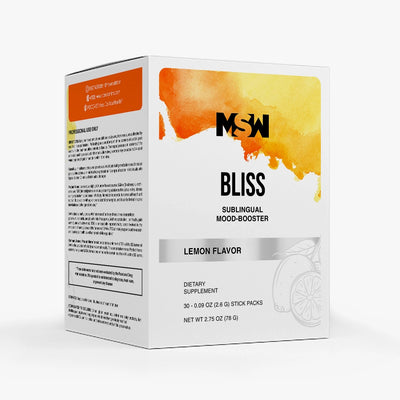
Bliss by MSW Nutrition
A lemon-flavored sublingual powder delivering TMG — a concentrated methyl donor — that supports the methylation pathways needed to produce serotonin and dopamine. Formulated for those with MTHFR variants, B vitamin deficiencies, or anyone whose mood and focus aren't where they should be.
"I started taking Bliss in the morning and noticed a difference in my mood and focus within the first week. I sleep better too." — MSW Nutrition customerTry Bliss — $129.00 →
Your Daily Serotonin Reset Protocol
Implementing the five levers above doesn't require an overhaul. Start with this daily framework:
- Morning sunlight: 10–15 minutes outdoors within the first hour of waking. Skip the sunglasses for the first few minutes.
- One fermented food daily: Sauerkraut, beets, olives, kimchi, or fermented dark tea. One serving is enough to start rebuilding microbial diversity.
- Activated B vitamins: Look for methylfolate, P5P, and methylcobalamin on the label. Standard folic acid and cyanocobalamin require MTHFR conversion and are less effective for many people.
- Methylation support: A concentrated methyl donor like TMG gives your serotonin synthesis pathway direct fuel, independent of MTHFR function.
- Light discipline at night: Dim lights after 8 PM, avoid screens in bed, and allow the serotonin-to-melatonin conversion to complete.
- Daily movement: Even a 20–30 minute walk is enough to measurably support serotonergic activity.
Consistency over intensity. These interventions compound over weeks — not days — but the trajectory is reliable when the inputs are right.

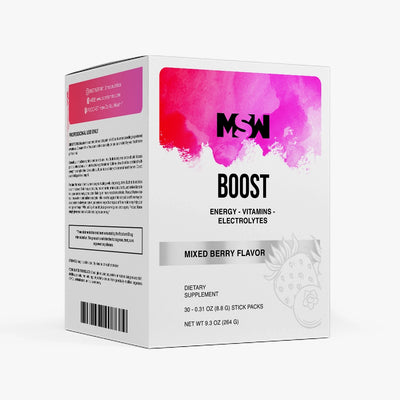
Already working on your gut and methylation? Pair Bliss with Boost by MSW Nutrition — an activated B-complex with methylfolate, P5P, and methylcobalamin that gives your serotonin synthesis the cofactors it needs to run at full capacity.
👉 Get Boost by MSW Nutrition →References
- Cleveland Clinic. Serotonin: What It Is, Functions & Levels. https://my.clevelandclinic.org/health/articles/22572-serotonin
- Integrative Medicine Insights. Gut Microbiota and Serotonin Synthesis. ScienceDirect, 2026. https://www.sciencedirect.com/article/pii/S2950194626000142
- Höglund E, et al. Serotonin-Melatonin Conversion Pathway. PMC, 2021. https://pmc.ncbi.nlm.nih.gov/articles/PMC8659113/
- Kennedy DO. B Vitamins and the Brain: Mechanisms, Dose and Efficacy. Nutrients, 2016. https://pmc.ncbi.nlm.nih.gov/articles/PMC4772032/
Frequently Asked Questions
P.S. If the MTHFR section resonated — a simple gene test can confirm whether you carry a variant, and if you do, it changes how you approach supplementation entirely. In the meantime, Bliss is formulated to support methylation regardless of your genetic status. Start there.
Try Bliss by MSW Nutrition — $129.00 →