

By Baldomero Garza, Co-Founder, MSW Nutrition
The Motivation Problem No One Is Diagnosing
When's the last time you woke up genuinely motivated?
Not "I had coffee so I'm moving" motivated — but actually driven, focused, and rewarded by the work in front of you. For a growing number of people, that feeling is quietly fading. And research suggests it's not a willpower problem. It's a chemistry problem.
The neurotransmitter at the center of it all? Dopamine.
Dopamine is one of the most talked-about neurotransmitters in health conversations — and consistently one of the most misunderstood. Most people associate it with pleasure and reward. But the science shows it does far more than that. And when it's depleted, the consequences show up in nearly every system in your body.
What Dopamine Actually Does in the Body
According to published research, dopamine plays essential roles across multiple biological systems:
- Motor function and movement coordination
- Spatial memory and cognitive processing
- Motivation and goal-directed behavior
- Arousal and sustained attention
- Reward processing and pleasure response
- Regulation of sexual behavior and reproductive function
What most people don't realize: dopamine receptors aren't confined to your brain. They're found throughout your body — in blood vessels, kidneys, heart, adrenal glands, and most densely in the retina. This is likely why morning sunlight has such a measurable effect on mood and focus. Dopamine receptors in the eye may be directly activated by light exposure, creating a cascade that influences how alert, motivated, and clear-headed you feel for the rest of the day.
Low dopamine doesn't look like one thing. It looks like all of this at once.
Recognizing a Dopamine Deficit
Dopamine deficiency isn't just a clinical diagnosis. Long before a neurological condition develops, low dopamine shows up as symptoms most people dismiss as stress, aging, or burnout:
- Difficulty staying focused or motivated throughout the day
- Emotional flatness, low mood, or inability to feel rewarded
- Fatigue that doesn't resolve with rest or sleep
- Compulsive behaviors around food, screens, work, or stimulation
- Brain fog, poor memory, and reduced mental clarity
- Feeling chronically "stuck" or disengaged from life
Research shows that D2 receptor availability — one of the primary dopamine receptor subtypes — is significantly reduced in individuals experiencing addiction and obesity. This points to a broader dopamine dysfunction pattern that is far more widespread than clinical literature typically addresses. ADHD, for example, is strongly associated with polymorphisms in D4 and D5 dopamine receptor genes — something we explore in depth in our article on ADHD and natural focus support.
Get this research in your inbox every Tuesday.
Join thousands of readers who get The Wellness Chronicles — one science-backed health insight per week from MSW Nutrition.
Subscribe Free →Why 50% of Your Dopamine Starts in Your Gut
This is the insight that changes how most people think about brain health.
Your gut microbiome produces approximately 50% of your body's dopamine — independently from your brain. The gut and central nervous system are in constant communication through what researchers call the gut-brain axis, and the health of your digestive tract directly influences your neurotransmitter output.
Published research has identified specific bacterial enzymes — including tyrosine decarboxylase (TDC) and aromatic L-amino acid decarboxylase (AADC) — that convert dietary precursors into dopamine within the gut. Strains like Enterococcus faecalis and Enterococcus faecium are particularly active in this process. When your microbiome is disrupted, dopamine production downstream takes a hit.
What disrupts the gut's ability to produce dopamine? Far more than most people realize. If you've dealt with chronic digestive issues, there's a direct line between your gut health and your mental energy — something we cover in detail in what your gut has been trying to tell you.
- History of antibiotic use
- Chronic digestive symptoms (bloating, IBS, SIBO, acid reflux, leaky gut)
- Low intake of fermented foods and dietary fiber
- Gut infections or prolonged gut inflammation
- Chronic stress, which alters gut motility and microbiome diversity
If you have gut issues, you likely have a dopamine production problem — regardless of what your labs say. The two are inseparable.

🌿 Upgrade Your Dopamine Production
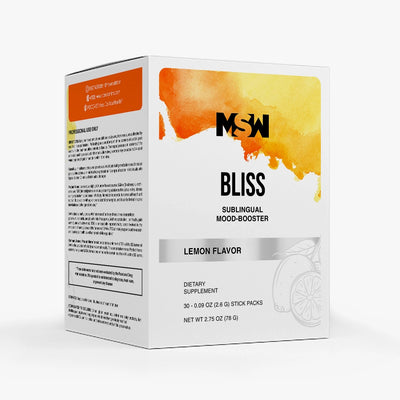
Bliss by MSW Nutrition is a lemon-flavored sublingual powder built around SAMe and TMG — two powerful methyl donors that directly support dopamine and serotonin synthesis through the methylation pathway. No caffeine. No stimulants. Dissolves on your tongue in seconds.
“After 3 weeks with Bliss, I could finally sit down and focus for more than 20 minutes. The brain fog I’d had for two years started clearing. I didn’t think a supplement could actually do that.”
— Maria T., MSW Nutrition customer
The Biochemistry of Dopamine Production
Understanding dopamine synthesis starts with one enzyme: tyrosine hydroxylase (TH). This rate-limiting enzyme converts the amino acid L-tyrosine into L-DOPA, the direct precursor to dopamine. For this process to work, your body requires a specific set of nutritional cofactors — and if any are missing, the entire production chain stalls.
- Vitamin B6 (pyridoxal phosphate) — required to convert L-DOPA into dopamine via DOPA decarboxylase
- Folate (Vitamin B9) — supports methylation and overall neurotransmitter synthesis capacity
- Iron (Fe2+) and Oxygen — essential cofactors for tyrosine hydroxylase activity
- Vitamin C (L-ascorbic acid) — required for dopamine's further conversion to norepinephrine
- SAMe (S-Adenosylmethionine) — a methyl donor produced in the liver from L-methionine and ATP, critical for dopamine, serotonin, and epinephrine synthesis
SAMe is particularly noteworthy. Research documents its role as a methyl donor in neurotransmitter secretion — including dopamine, norepinephrine, and serotonin — as well as DNA expression and inflammation modulation. Many people with low mood or flat energy are quietly dealing with methylation insufficiency. This is closely related to MTHFR gene variants that affect how well your body methylates — and by extension, how much dopamine you can actually produce.
Natural Strategies to Support Dopamine Production
The research points to several well-supported approaches for restoring dopamine balance. These are not hacks. They are the conditions the body was designed to operate within.
Lifestyle
- Morning sunlight exposure (shown to activate dopamine receptors in the retina and support circadian rhythm)
- Regular exercise, ideally in natural outdoor settings
- Quality sleep — dopamine is preserved during rest, not consumed. If poor sleep is affecting your energy and mood, read our deep-dive on how sleep deprivation disrupts your hormones and metabolism
- Music and meditation (both shown in research to increase dopamine production naturally)
- Physical connection and meaningful social interaction
Nutrition and Supplementation
- Prioritize Vitamin B6-rich foods or supplement with methylated B vitamins
- Ensure adequate folate (B9) — deficiency directly impairs neurotransmitter production
- Support gut health to protect your dopamine's largest production site
- Consider probiotics and fermented foods to strengthen microbiome diversity
- Support the methylation pathway directly with SAMe and TMG supplementation
This is exactly why we developed Bliss at MSW Nutrition. SAMe combined with TMG (trimethylglycine) provides targeted support for the methylation pathway — the biochemical process your body uses to produce dopamine, serotonin, norepinephrine, and other key neurotransmitters. As a sublingual powder, it bypasses digestive processing and delivers active ingredients directly into the bloodstream.
Ready to support your dopamine naturally?
Bliss delivers SAMe and TMG sublingually — straight into your bloodstream, no digestion required. Most people feel a difference within minutes.
👉 Get Bliss by MSW Nutrition →References
- SAMe and neurotransmitter synthesis
- How to increase dopamine naturally
- Dopamine metabolism and gut-brain axis
- Gut microbiome and dopaminergic pathways
- B vitamins and neurotransmitter production
Frequently Asked Questions
What are the most common signs of low dopamine?
The most common signs include difficulty staying motivated, emotional flatness (feeling "meh" about things you used to enjoy), brain fog, chronic fatigue that doesn't improve with sleep, and compulsive behaviors around screens, food, or stimulation. Many people describe it as feeling stuck or disengaged from life without a clear reason.
How long does it take to raise dopamine levels naturally?
It depends on the approach. Lifestyle changes like morning sunlight, exercise, and sleep improvements can produce noticeable changes within 1–2 weeks. Methylation support through SAMe and TMG (like in Bliss) often produces effects within minutes to hours due to sublingual delivery. Rebuilding gut-based dopamine production through microbiome changes takes 4–8 weeks of consistent support.
Can gut problems really affect my mood and motivation?
Yes — and the science behind this is very clear. Approximately 50% of your body's dopamine is produced in your gut microbiome, not your brain. When your gut is inflamed, dysbiotic, or lacking diversity, dopamine production drops significantly. People with IBS, SIBO, leaky gut, and chronic bloating frequently report brain fog, low motivation, and flat mood — symptoms that often improve dramatically when gut health is addressed.
Is Bliss a stimulant? Will it cause a crash?
No. Bliss contains no caffeine, no stimulants, and no habit-forming compounds. It works by providing SAMe and TMG — methyl donors that support the natural biochemical pathways your body uses to produce dopamine and serotonin. Because it supports production rather than artificially elevating neurotransmitters, there is no crash or dependency effect.
What's the connection between ADHD and dopamine?
ADHD is fundamentally a dopamine dysregulation condition. Research shows that ADHD is strongly associated with genetic polymorphisms in the D4 and D5 dopamine receptor genes, as well as reduced dopamine transporter function. This is why stimulant medications work — they increase dopamine availability. Natural approaches that support dopamine production and methylation can provide meaningful support, particularly for people who want alternatives to medication or want to complement it.
What is methylation and why does it matter for dopamine?
Methylation is a fundamental biochemical process that happens billions of times per second in your cells. It's essential for producing dopamine, serotonin, and epinephrine — your key mood and motivation neurotransmitters. SAMe (S-Adenosylmethionine) is the primary methyl donor in this process. When methylation is impaired — due to MTHFR gene variants, nutrient deficiencies, or chronic stress — neurotransmitter production drops. Supporting methylation is one of the most direct ways to restore dopamine balance.
P.S.
If you're dealing with brain fog, flat mood, or that can't-get-started feeling, your dopamine production pathway may be the root cause. Bliss supports the exact biochemical process your body uses to make dopamine and serotonin naturally — no stimulants, no crash, just the raw materials your system needs to do what it was designed to do.
Try Bliss here →