

By Baldomero Garza, Co-Founder, MSW Nutrition
When blood sugar goes sideways — the crashes, the cravings, the weight that will not move — almost everyone points at the same three suspects. Sugar. The pancreas. Willpower. Almost nobody points at the liver. That is a problem, because the research on liver and blood sugar has been unusually clear for years: the liver is the main organ for glucose storage and for endogenous glucose production. It is not a bystander. It is closer to the control room.
1. Your liver stores your blood sugar
Everything you eat eventually becomes glucose in circulation. Carbohydrate most obviously, but protein and fat contribute too. That glucose has four main destinations: skeletal muscle, the liver, fat cells, and the brain.
The liver's share gets stored as glycogen. When you stop eating, the process reverses. During short fasting periods the liver breaks glycogen back down into glucose to keep you supplied. Push the fast longer and glycogen runs out, so the liver switches to gluconeogenesis — building glucose from scratch out of available precursors.
Here is the part that breaks. Storage capacity is finite. If more goes in than comes out, meal after meal, year after year, you do not get a bigger tank. You get a full one — and eventually an overflowing one. In the liver, that overflow has a name most people have heard without understanding: fatty liver.
One number reframes the whole thing: skeletal muscle takes up and metabolizes approximately 80% of the glucose circulating after a meal — but only when it is being used. Sit still after eating and that capacity goes unclaimed, and the overflow gets routed to storage instead.
2. Insulin resistance starts in the liver
Insulin's job here is transport. Blood glucose rises after a meal, insulin moves it into storage. That works beautifully until the destinations stop accepting deliveries.
Insulin and glucagon regulate this balance in opposition by design — one storing, one releasing. Tip too far toward storage for too long and tissues stop responding to insulin's signal the way they should. Notably, the research shows an abnormally increased rate of hepatic glucose production is a feature of both type 1 and type 2 diabetes.
Read that carefully: the liver producing too much glucose is part of the picture, not only the pancreas producing too little insulin. Which is why "just cut carbs" is an incomplete answer. It addresses what goes in. It does nothing about the state of the organ doing the storing. If you want the broader picture on how liver strain shows up day to day, we covered that in Dealing with Digestive Issues? Your Liver Health Might Be to Blame.
3. Stress raises blood sugar without food
You can be fasted, sitting still, and watch glucose climb.
That is cortisol doing exactly what cortisol is built to do. Glucocorticoids promote hepatic glucose production directly — your body making fuel available when it thinks you need to act. A morning alarm, a deadline, traffic, a difficult conversation: each one signals the liver to release stored glucose.
That system is not broken. The problem is chronic activation. Sustained elevated cortisol is associated with insulin resistance and muscle loss — and it drives appetite for exactly the foods that put more glucose back into a system already struggling to place it. The stress loop feeds the storage loop, which is why managing stress belongs in a metabolic conversation and not just a wellness one.
Get this research in your inbox every Tuesday
Plain-language breakdowns of what the literature actually says — no hype, no fear.
Subscribe Free4. Blood sugar and the liver regulate your mitochondria
Follow the thread to the end and it arrives at your mitochondria.
Insulin resistance and altered hepatic mitochondrial function are central features of both type 2 diabetes and non-alcoholic fatty liver disease. They travel together — and the sequence matters. Research indicates alterations in mitochondrial function appear early in the development of hepatic insulin resistance, not as a late-stage consequence.
The mechanism runs through oxidative stress. Mitochondria under strain generate reactive oxygen species, which damage mitochondrial DNA, proteins and lipids. That damage interferes with insulin signaling directly, and also triggers the removal of damaged mitochondria — reducing overall cellular oxidative capacity, which makes it easier for fat to accumulate where it should not.
It is a loop. Which is also why what you eat matters upstream of all of it — see Healthy Liver for a Healthy Life: 5 Foods to Optimize Liver Health.
5. Obesity, resveratrol and PGC-1 alpha
Of all the compounds studied in this space, resveratrol has one of the deepest research files — and the reason is what it appears to activate rather than what it suppresses.
The proposed mechanism runs through a network: SIRT1 and AMPK converging on PGC-1α, widely described as a master regulator of mitochondrial biogenesis. AMPK is the cell's energy sensor. When activated, it promotes glucose uptake and utilization and pushes fatty acids into the mitochondria to be burned rather than stored.
There is a second pathway in liver cells specifically: resveratrol upregulates endothelial nitric oxide synthase, and that nitric oxide signal ultimately feeds the same PGC-1α pathway.
And the circle closes back at muscle. Overexpression of PGC-1α in human muscle cells increases mitochondrial density and produces a profile resembling that of highly trained athletes — and exercise upregulates PGC-1α. So movement after a meal is not just burning off what you ate. It changes where the fuel goes and supports the machinery everything above depends on.
 |
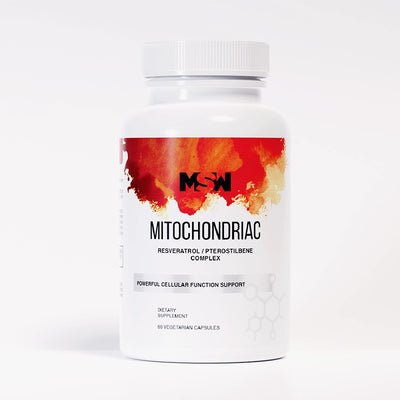
The Metabolic Pack Three formulas for the three systems this research keeps connecting. Liver Boost supports phase I and phase II liver detoxification pathways. Mitochondriac delivers resveratrol, quercetin and pterostilbene to support cellular energy production. Zen supports a healthy stress and cortisol response. Daily: 2 Liver Boost, 1 Mitochondriac, 1 Zen — with food. Try the Metabolic Pack — $279 → |
What to actually do
Four things, in order of how much they move:
- Move after meals. Ten to fifteen minutes of walking, most meals. This is the highest-leverage habit in the entire article, and it aims squarely at the 80%.
- Treat stress as metabolic. Sleep, morning light exposure, and genuine downtime are blood sugar tools, not soft ones.
- Reduce the inflow. Fewer processed carbohydrates and longer gaps between meals, so one organ is not asked to absorb everything.
- Support the systems together. Liver, stress response and cellular energy are one loop.
If you are already taking a liver formula and want to get more out of it, How to Maximize the Effectiveness of Liver Boost walks through timing and pairing.
 |
Want to start with the liver alone? Liver Boost is the detoxification piece of the pack on its own — NAC, alpha lipoic acid, milk thistle, turmeric and green tea, formulated to support phase I and phase II liver detoxification pathways. 👉 Get Liver Boost by MSW Nutrition — $111 → |
References
- Hepatic Glucose Metabolism in the Steatotic Liver — Frontiers in Endocrinology
- Gluconeogenesis — Britannica
- Cortisol, insulin resistance and metabolic regulation — Metabolites (MDPI)
- Hepatic mitochondrial function in insulin resistance and NAFLD — PMC
- Mitochondrial dysfunction, obesity and insulin resistance — Frontiers in Physiology
- Resveratrol, AMPK and hepatocyte mitochondria — Molecular Pharmacology
- World Obesity Day — global obesity projections
Frequently asked questions
How are the liver and blood sugar connected?
The liver is the body's main site of glucose storage and production. It banks glucose as glycogen after meals and releases it back into circulation during fasting, which means it has direct influence over what your blood sugar does between meals.
What is hepatic insulin resistance?
It describes the state where liver tissue stops responding normally to insulin's signal. Research associates it with an abnormally increased rate of hepatic glucose production, which is observed in both type 1 and type 2 diabetes.
Can stress raise blood sugar without eating?
Yes. Glucocorticoids such as cortisol promote hepatic glucose production directly, so blood glucose can rise from a stress signal alone with no food involved.
Why does muscle matter for blood sugar?
Skeletal muscle takes up and metabolizes approximately 80% of the glucose circulating after a meal — but that capacity depends on the muscle being used. Movement after eating is one reason exercise is so closely tied to insulin sensitivity in the literature.
What does resveratrol have to do with the liver?
Resveratrol is studied for its role in activating the SIRT1/AMPK/PGC-1α signaling axis associated with mitochondrial biogenesis. In liver cells specifically, it also upregulates endothelial nitric oxide synthase, which feeds into the same pathway.
What is in the Metabolic Pack?
Three MSW Nutrition formulas: Liver Boost to support liver detoxification pathways, Mitochondriac for resveratrol, quercetin and pterostilbene to support cellular energy production, and Zen for adaptogenic support of a healthy stress and cortisol response.
P.S. If you change one thing after reading this, make it the walk after dinner. It costs nothing and it aims at the largest share of the glucose. And while you build that habit, support the liver, stress and cellular-energy side of the loop.
Get the Metabolic Pack — $279 →These statements have not been evaluated by the Food and Drug Administration. This product is not intended to diagnose, treat, cure, or prevent any disease. This article is for educational purposes and is not medical advice; talk with your healthcare provider before changing your routine.