

By Baldomero Garza, Co-Founder, MSW Nutrition
Most of the folate sold in the supplement aisle is a form your body cannot use yet. It has to be converted first, and that conversion depends on a single enzyme. Roughly a third of the population carries a gene variant that makes that enzyme run measurably slower — which means methylation, the process the whole thing feeds, can be running short without anything showing up as abnormal on a standard panel.
This article covers what that process does, how the variant slows it, and the one label change that matters most.
What methylation is, and the five jobs it runs
Methylation is a transfer. A methyl group — one carbon atom bonded to three hydrogens — gets handed from one molecule to another. That is the entire reaction, and it happens billions of times per second.
Your body depends on it for:
- Neurotransmitter synthesis — serotonin, dopamine, epinephrine
- Hormone clearance — moving estrogen and other hormones out of circulation
- DNA repair and gene expression — switching genes on and off
- Cellular energy production inside the mitochondria
- Glutathione synthesis — your primary internal antioxidant
Mood, hormones, energy, detox. Those are the four complaints people bring up most often when they cannot name what is wrong, and they share an upstream process. We covered the neurotransmitter side of this in how to increase serotonin naturally.
What impaired methylation feels like
A slow cycle does not announce itself. It shows up as a cluster, and because each symptom gets investigated on its own, each one comes back inconclusive:
- Fatigue that sleep does not fix
- Low mood, and a shorter fuse than usual
- Brain fog and word-finding trouble
- Hormone symptoms that cycle unpredictably
- Poor tolerance for alcohol, caffeine, or strong smells
- Elevated homocysteine on a standard blood panel
- Low-grade inflammation with no obvious source
Individually, each has a dozen explanations. Together they point at one place. If the fatigue piece is what brought you here, the science behind a brain running on empty covers the energy side in more depth.
MTHFR: the gene that decides whether your folate works
The enzyme behind all of this is MTHFR — methylenetetrahydrofolate reductase. Its job is narrow: convert folate into its active, usable form so the cycle has fuel.
A 2025 review in Genes examined the most common variant, C677T, across cardiology, oncology, neurology, and psychiatry.1 Three numbers from it are worth keeping:
- The polymorphism averages 30–40% prevalence across human populations, varying widely by geography.
- Each mutated allele produces roughly a 35% decrease in enzyme efficiency. Two copies roughly double the penalty.
- People carrying two copies have about 20% lower folate levels than people with none.
None of that is exotic. It is common, it is measurable, and it is almost never part of a standard workup.
Get this research in your inbox every Tuesday
One evidence-based breakdown a week. No hype, no fluff.
Subscribe Free →Folic acid vs. folate vs. methylfolate
This is the practical consequence, and it is the part worth acting on this week.
Folic acid is synthetic and fully oxidized. Your body has to run it through several conversion steps — including the MTHFR step — before it can be used. It is what sits in most inexpensive multivitamins and in fortified flour.
Folate is the umbrella term for the natural forms found in food: leafy greens, legumes, liver.
Methylfolate (5-MTHF) is the finished product. Already converted, ready to enter the cycle, no MTHFR step required.
If the enzyme is the bottleneck, handing it more raw material does not help. You need the material that is already past the bottleneck. A 2021 paper in Alternative Therapies in Health and Medicine argued that earlier folate research had overlooked polymorphisms like MTHFR entirely, noting that in the brain, folate is one nutrient among others involved in producing the neurotransmitters that affect mood.2
The same logic applies to B12. Cyanocobalamin has to be converted; methylcobalamin does not. Worth reading your label for.
Four ways to support methylation
- Find out whether you carry the variant. Direct-to-consumer genetic testing reports MTHFR status, and it is a reasonable question to bring to your healthcare provider. You only need the answer once.
- Switch to the pre-converted forms. Methylfolate and methylcobalamin instead of folic acid and cyanocobalamin. Read the label on what you are already taking — this change often costs nothing.
- Supply methyl donors directly. TMG (trimethylglycine, also called betaine) donates methyl groups into the cycle without waiting on a conversion step. A 2021 review in Biology describes betaine restoring the SAM:SAH ratio — the standard laboratory measure of methylation capacity — alongside support for liver health and glutathione production.3
- Stop the drains. Chronic stress, heavy alcohol intake (the same review documents alcohol raising homocysteine and pushing the SAM:SAH ratio down), a diet thin on B12 and folate, poor gut absorption, and certain common medications including metformin and proton pump inhibitors, which interfere with the nutrients the cycle depends on.
 |
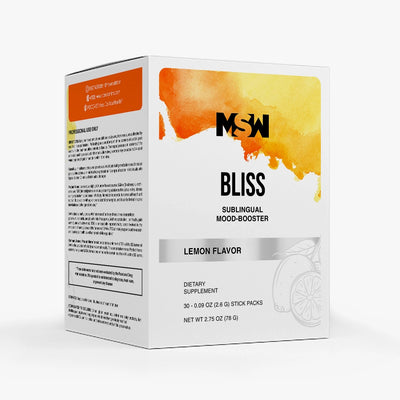
Bliss (Mood Booster) Built around TMG — trimethylglycine — a naturally occurring methyl donor that enters the cycle without a conversion step. Formulated to support the biochemical reactions that require methyl groups, neurotransmitter synthesis and healthy mood, the conversion of homocysteine to glutathione, and liver health.* One lemon stick pack in 6–12 oz of water, once a day. 30 packets. Try Bliss — $129 → |
If you want the methylated B12 side covered in the same routine, we build that into a separate formula — and there is more on how the two work together in how and why Bliss helps boost dopamine.
 |
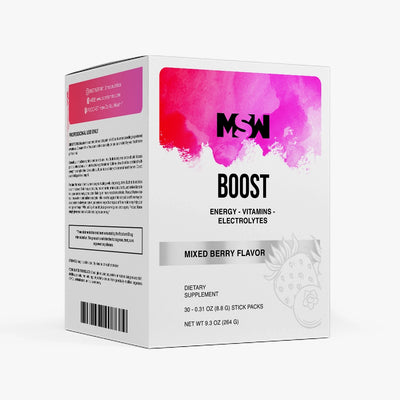
Step 2 said stop taking the form your body has to convert. Boost was originally designed to raise B12 levels between vitamin therapy shots, and it delivers over 2,500 mg of methylcobalamin — the pre-converted form — alongside B vitamins, electrolytes, and S-acetyl-L-glutathione.* 👉 Get Boost by MSW Nutrition → |
How long methylation support takes
Methylation support is not a switch. It is a supply problem, and supply builds.
What the research describes — and what makes mechanistic sense — is gradual change across energy, mood, cognitive clarity, and hormone balance as the cycle stops running short. Weeks, not days. That is a less exciting promise than most supplement copy makes, and it is the accurate one.
Frequently asked questions
What is methylation in simple terms?
It is a chemical transfer in which a methyl group — one carbon atom bonded to three hydrogen atoms — moves from one molecule to another. Your body uses that transfer to build neurotransmitters, clear hormones, repair DNA, produce cellular energy, and make glutathione.
How common is the MTHFR variant?
A 2025 review in Genes reports that the C677T polymorphism averages 30–40% prevalence across human populations, ranging from 0% to over 40% depending on geographic location.
Why is folic acid a problem if I have the MTHFR variant?
Folic acid is synthetic and must be converted through several steps, including the one the MTHFR enzyme performs. If that enzyme runs at reduced efficiency, supplying more folic acid does not clear the bottleneck. Methylfolate is already converted, so it bypasses that step.
What is TMG and how does it relate to methylation?
TMG stands for trimethylglycine, also known as betaine. It is a methyl donor, meaning it hands methyl groups directly into the methylation cycle. A 2021 review in Biology describes betaine restoring the SAM:SAH ratio, the standard laboratory measure of methylation capacity.
How do I find out if I carry the MTHFR variant?
Direct-to-consumer genetic testing reports MTHFR status, and it is a reasonable question to bring to your healthcare provider. Because it is a fixed genetic result, you only need the test once.
What else drains methylation besides genetics?
Chronic stress, heavy alcohol intake, a diet low in B12 and folate, poor gut absorption, and certain common medications including metformin and proton pump inhibitors, which interfere with the nutrients the cycle depends on.
References
- Araszkiewicz AF, et al. MTHFR Gene Polymorphisms: A Single Gene with Wide-Ranging Clinical Implications—A Review. Genes. 2025;16(4):441.
- Stengler M. The Role of Folate and MTHFR Polymorphisms in the Treatment of Depression. Alternative Therapies in Health and Medicine. 2021.
- Kharbanda KK, et al. Betaine: A Comprehensive Review of Its Beneficial Effects. Biology. 2021;10(6):456.
P.S. The cheapest thing you can do this week is turn your multivitamin around and read the folate line. If it says "folic acid," you are asking an enzyme to do work it may not be able to do.
Get Bliss — $129 →*These statements have not been evaluated by the Food and Drug Administration. This product is not intended to diagnose, treat, cure, or prevent any disease.